Jehad Cheyi
AI in Medicine
Researcher in AI & Biomedical Imaging

Jehad Cheyi

M.Sc. in Computer Engineering specializing in Deep Learning, CNNs, and Computer Vision applied to biomedical imaging — advancing AI-powered cancer detection and clinical diagnostics.

Deep Learning
Computer Vision
Biomedical Imaging

About Me

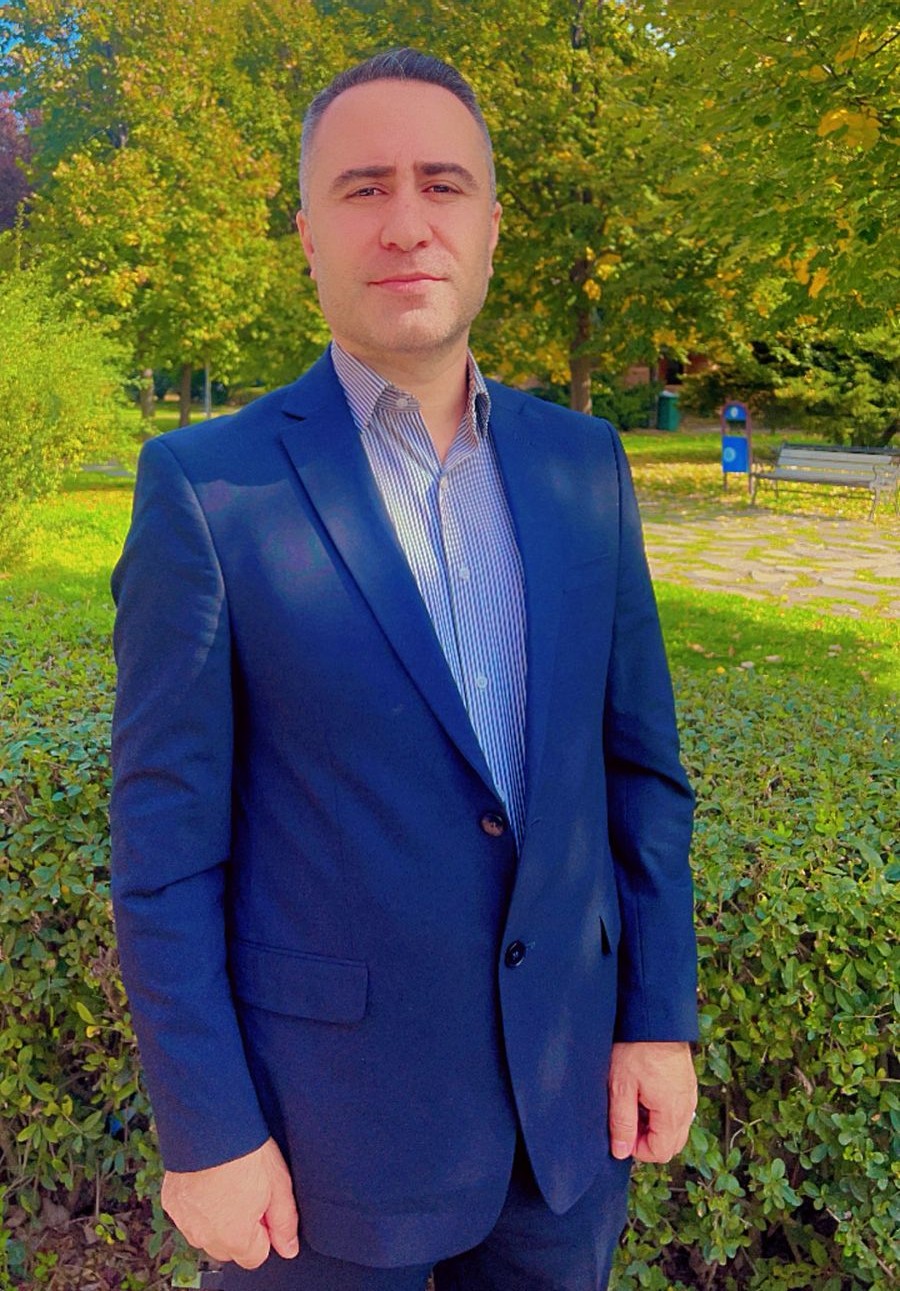
I am a Computer Engineer, researcher, and innovator with a Master's degree in Computer Engineering, specializing in Deep Learning, Convolutional Neural Networks (CNN), and Computer Vision. My passion lies in integrating artificial intelligence with biomedical imaging to develop cutting-edge solutions for critical healthcare challenges. Through years of academic study and hands-on research, I have focused extensively on the early and accurate detection of cancers—particularly breast cancer—by leveraging state-of-the-art techniques in AI and image analysis.

My work involves designing, optimizing, and implementing advanced AI pipelines for the automated detection, segmentation, and classification of cancerous lesions, aiming to support clinicians in making faster, more reliable diagnoses. I am adept at working with diverse medical imaging modalities including mammography, ultrasound, X-ray, and histopathology, and have developed robust models validated on large, annotated datasets.

In addition to research, I am deeply interested in the practical translation of AI models into clinical environments, emphasizing interpretability, reproducibility, and collaboration with multidisciplinary teams. My vision is to advance medical imaging and healthcare analytics by combining technical excellence with a dedication to real-world impact and innovation, contributing to improved patient outcomes and the next generation of intelligent healthcare systems.

Academic Background
M.Sc. in Computer Engineering
Turkey
2024
Thesis: AI-powered breast cancer detection & segmentation using CNNs
B.Sc. in Computer Science
Iraq
2015

Research & Projects
Breast Cancer Histopathology AI
Histopathology Image Analysis
Developed a custom AI model for histopathology image analysis, enabling automated classification and detection of breast cancer from tissue slide images with high accuracy and robust performance.
Live Demo on Hugging Face
Breast Cancer Ultrasound AI
Ultrasound Image Analysis
Created a high-accuracy ultrasound analysis model for breast cancer detection, leveraging advanced CNN architectures with segmentation and classification capabilities validated on clinical datasets.
Live Demo on Hugging Face
More Projects & Open Source
Explore all research and code
Explore additional research projects, AI experiments, and open-source contributions on my GitHub profile. From medical imaging pipelines to deep learning utilities, my repositories showcase a commitment to reproducible, impactful research.
View GitHub Profile

Publications & Outputs
J Cheyi, YÇ Kaya — Gazi University Journal of Science Part A: Engineering, 2024

Skills & Tools
Programming
PythonMATLABC++R
Frameworks
TensorFlowPyTorchKerasScikit-learnOpenCV
Architectures
U-NetMask R-CNNDeepLabResNetDenseNetEfficientNetTransformers
Medical Imaging Modalities
MammographyUltrasoundX-rayHistopathologyMRICT
Metrics & Evaluation
DiceIoUROC-AUCSensitivity/SpecificityF1 ScorePrecision/Recall
Tools & DevOps
DockerGitDICOM/NIfTIITK-SNAP3D SlicerImageJ/FijiLabelImg
Data & Visualization
NumPyPandasData AugmentationMatplotlibSeaborn
Cloud & Deployment
Google ColabKaggleAWS EC2/SageMakerFlask APIs
Methods & Special Topics
Transfer LearningFine-tuningHyperparameter OptimizationCross-validationGrad-CAMSHAPFederated Learning
Collaboration
JupyterOverleafLaTeXGitHubTrello

Career Goals & Interests
Federated Learning
Integrate federated learning for privacy-preserving cross-institutional AI, enabling collaborative model training without sharing sensitive patient data across hospitals and research centers.
Self-Supervised & Transformers
Advance self-supervised and transformer-based medical imaging approaches, reducing dependence on large annotated datasets while improving diagnostic accuracy and generalizability.
Clinical Translation
Translate models into clinics with explainability and clinician-centric design, ensuring AI tools are interpretable, trustworthy, and seamlessly integrated into real diagnostic workflows.

Academic Engagement
Conference Presentations
Presented research at MICCAI, VISAPP, and SIIM — sharing advances in AI-driven medical image analysis with the international research community.
Workshops & Seminars
Attended specialized workshops on AI in medical imaging, staying at the forefront of emerging techniques and networking with leading researchers.
Open to Collaboration
Actively interested in collaborative research and academic exchanges, welcoming partnerships that push the boundaries of AI in healthcare.